

 Back
Back

News


What is really happening inside the mold?
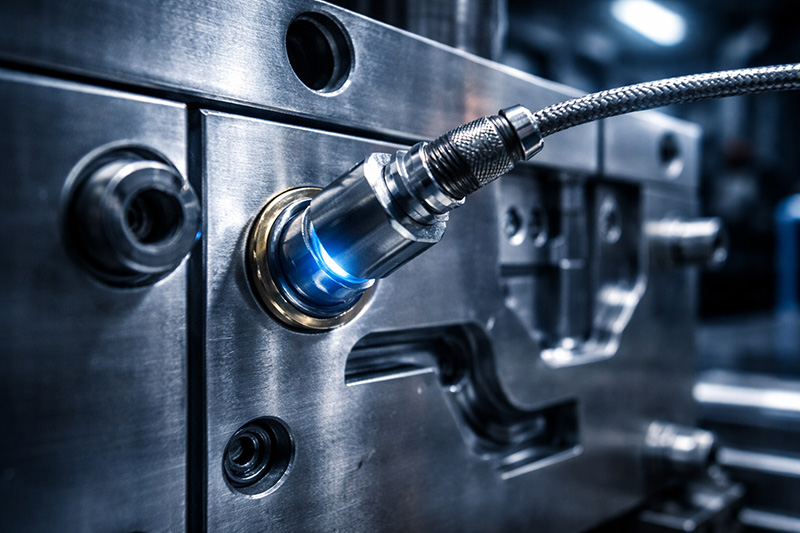
The transition to Industry 4.0 is profoundly transforming the plastics sector—and injection molding is no exception. Today, it is no longer enough to control the machine. The real challenge lies in understanding, in real time, what is happening inside the mold cavity.
Modern injection equipment allows for the monitoring of a wide range of parameters: temperatures, speeds, pressures, and times. However, this data represents only part of the process.
It is inside the mold cavity that the molten material behaves dynamically—directly influencing the final quality of the part. Without visibility into this stage, process control remains incomplete.
The result? Pressure curves that act as a “fingerprint” of each production cycle.
By analyzing these curves, it becomes possible to:
Identify process deviations at the moment they occur
Correlate variations with defects in the part
Establish reference patterns for stable production
Improve repeatability and consistency
When this data is integrated into acquisition and analysis systems, it opens the door to a new level of control:
Real-time automatic adjustments
Reduction of waste and rework
Increased operational efficiency
Implementation of predictive maintenance strategies
This is the true leap toward smart manufacturing—data-driven, autonomous, and highly efficient.
Pressure sensing in the mold cavity is not just an incremental improvement. It represents a paradigm shift: moving from indirect control to direct process control.
In an increasingly demanding market, this approach makes it possible to ensure quality, reduce costs, and strengthen competitiveness.